 English
 中文简体
中文简体Interiors & Materials — A Buyer's Field Guide
The Fabric
Beneath the Form
Six materials define nearly every upholstered sofa sold today — and the one you choose quietly decides how the piece will look, feel, and age for the next decade.
The short answer, before anything else
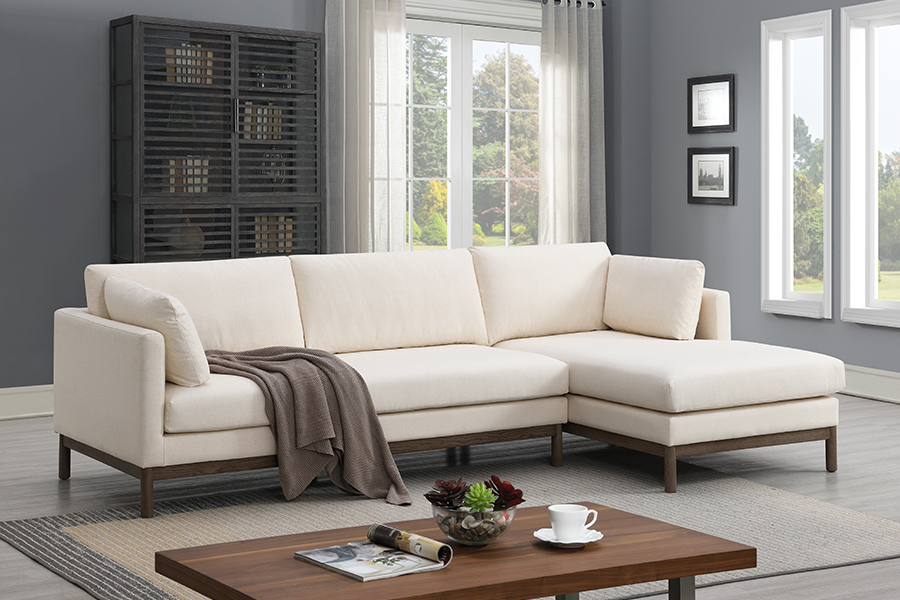
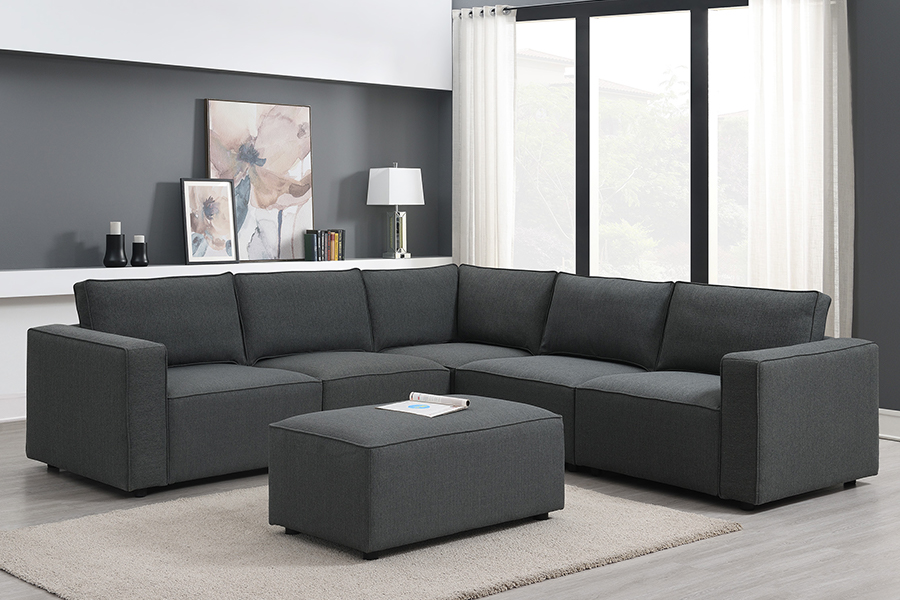
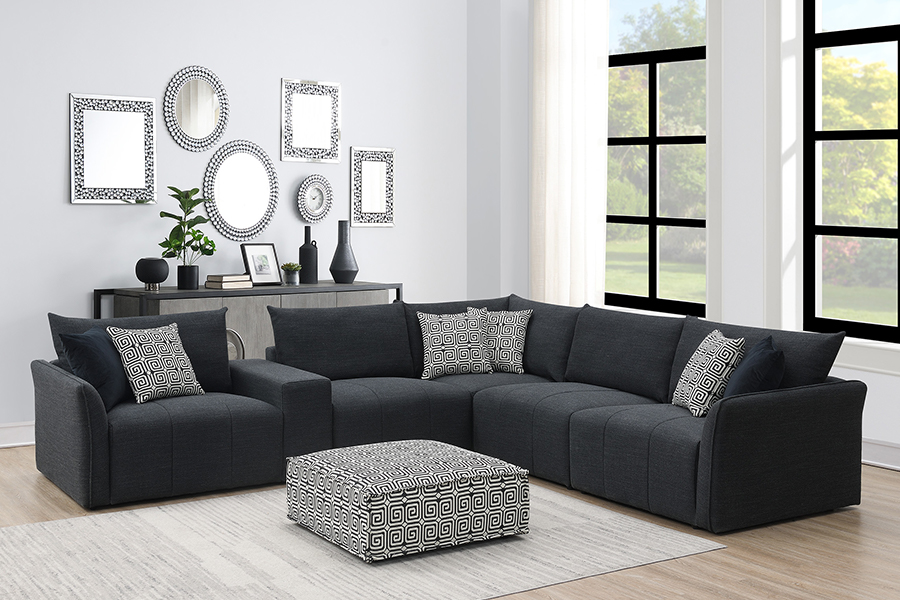
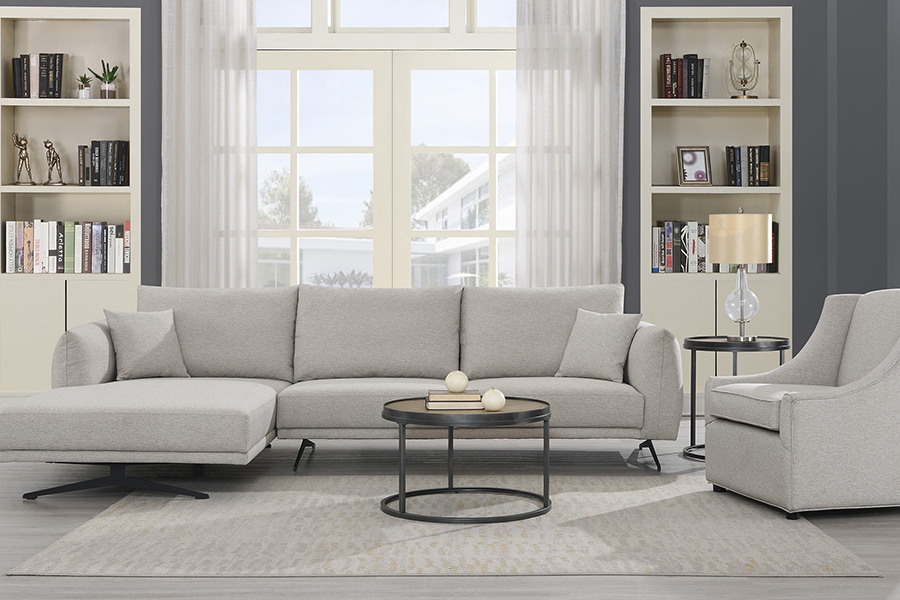
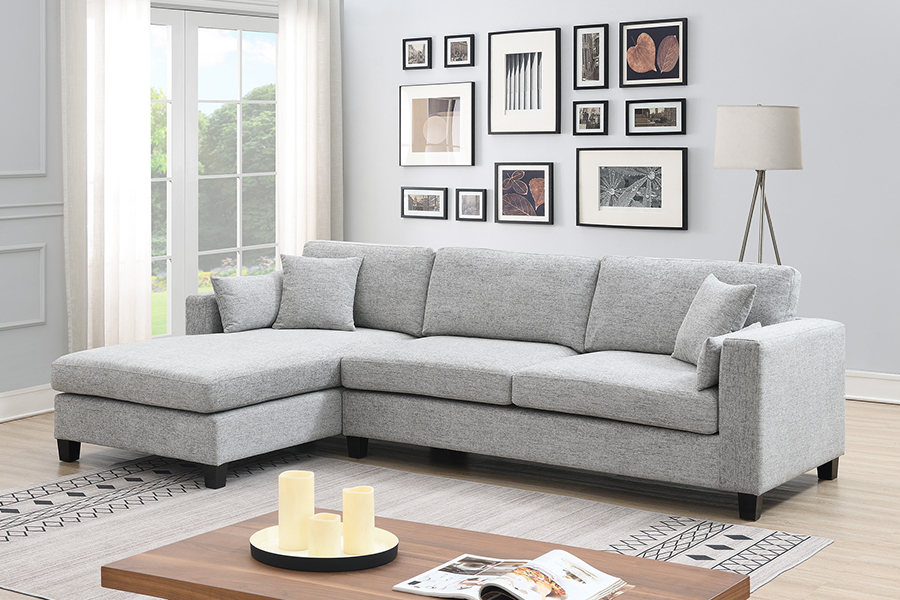
Upholstered sofas are typically covered in one of six fabric categories: cotton and linen blends, polyester and microfiber, velvet, chenille, performance fabrics, and faux leather or a leather and upholstery sofa combination. Each option differs in texture, durability, price, and maintenance needs, and the right choice depends largely on your household's daily wear, budget, and the look you want the piece to achieve. For most buyers, the decision comes down to balancing softness against long-term resilience, especially if the piece will serve as a large upholstered sofa in a high-traffic living room.
Before diving into specifics, it helps to know that fabric choice affects far more than appearance. It influences how the sofa feels to sit on, how it ages over years of use, how easily stains lift out, and how much the piece ultimately costs to buy or reupholster later.
Natural fiber fabrics: cotton, linen, and blends
Cotton and linen are among the most traditional upholstery materials. Cotton offers a soft, breathable surface that works well in casual and transitional interiors, while linen has a slightly coarser, more textured finish that lends a relaxed, natural look. Both fibers are comfortable against the skin and hold dye well, which is why they appear frequently in colorful or patterned sofa lines.
Strengths and trade-offs
The main drawback of pure cotton or linen is durability. These fibers wrinkle easily, absorb liquids quickly, and can show wear within three to five years under regular use. Manufacturers often blend them with synthetic fibers such as polyester to improve strength and reduce shrinkage, which extends usable life while keeping the natural texture.
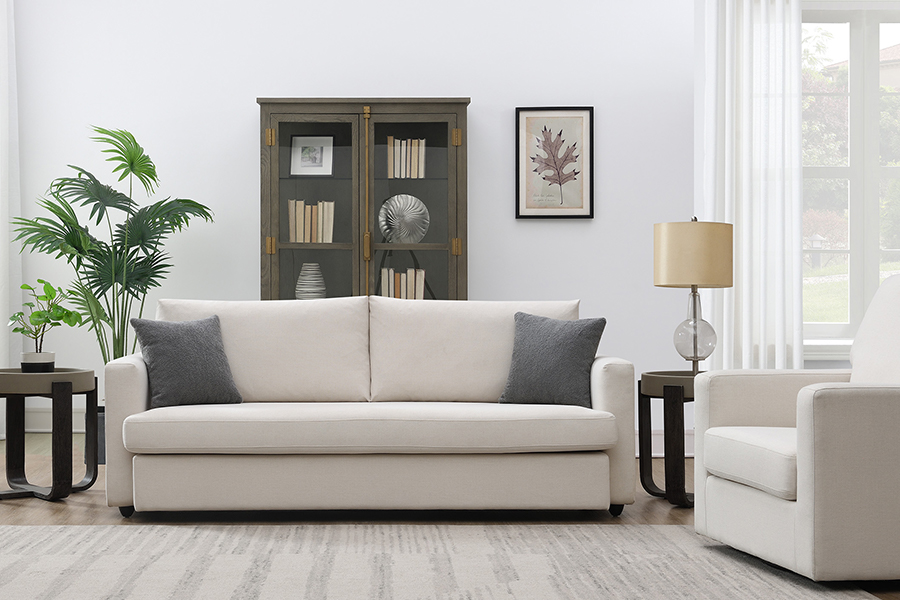
Upholstered sofas
Natural fiber is honest material — it shows exactly how a room is lived in, for better or worse.
Synthetic fabrics: polyester and microfiber
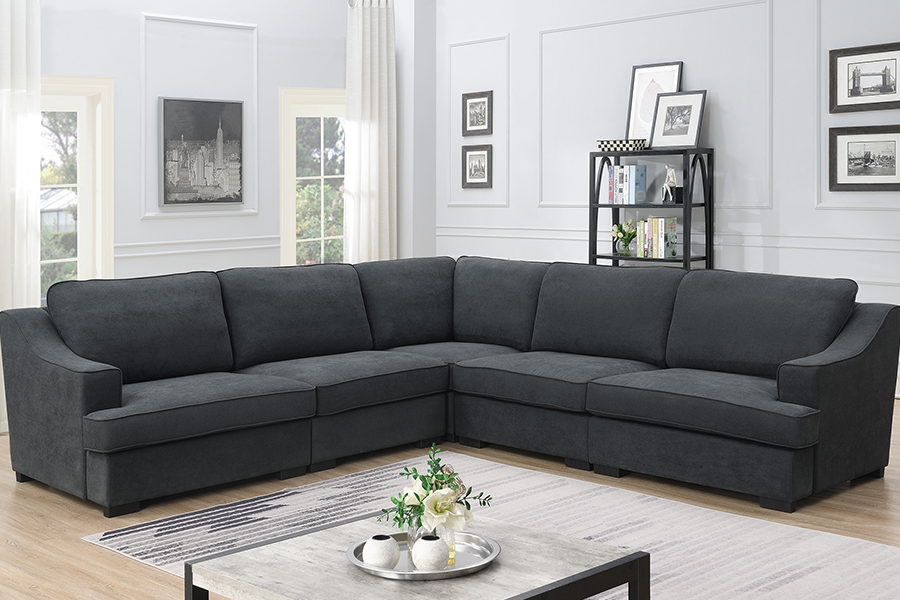
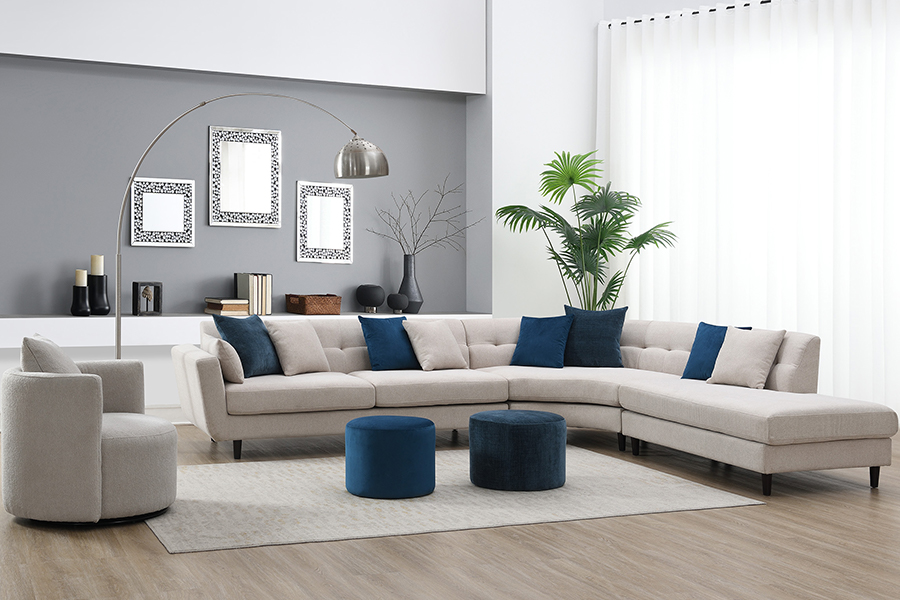
Polyester and microfiber are engineered specifically for upholstery durability. Microfiber, a tightly woven synthetic fabric, resists stains, pilling, and fading far better than natural fibers, making it a practical option for households with children or pets. It also tends to be more affordable, which is one reason it's a common choice for a large upholstered sofa where fabric yardage adds significantly to the total price.
Polyester blends offer similar resilience with a slightly softer hand feel. Independent testing organizations often rate polyester upholstery above 20,000 double rubs on the Martindale abrasion scale, a standard measure of fabric durability, compared to under 10,000 for many untreated cotton fabrics.
Higher Martindale ratings indicate a fabric can withstand more friction cycles before visible wear appears — a useful figure to ask about when comparing sofas in showrooms.
Textured options: velvet and chenille
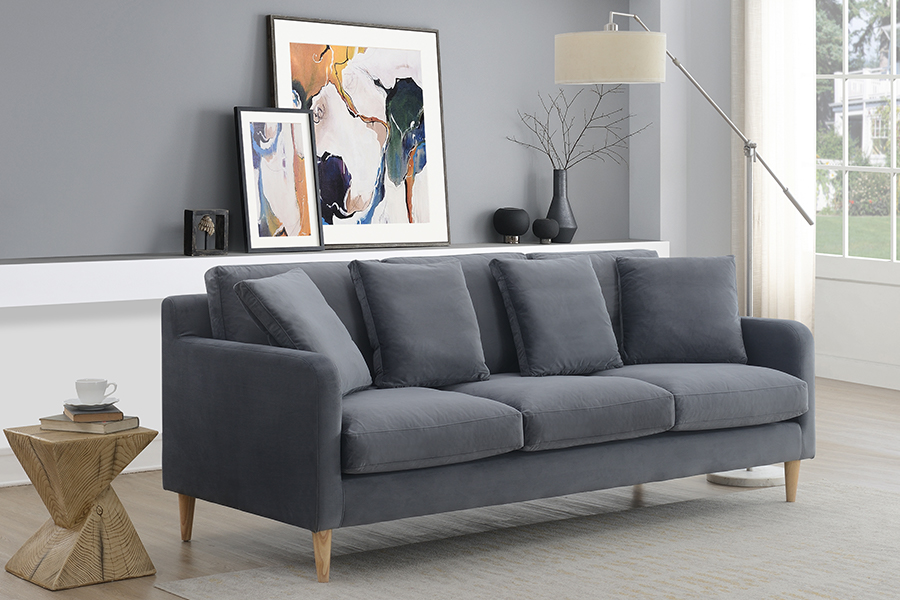
Velvet and chenille bring a plush, tactile quality to a sofa and are popular for statement pieces in living rooms or formal seating areas. Velvet has a dense, soft pile that reflects light differently depending on the angle, giving the fabric a rich, layered appearance. Chenille has a similarly soft texture but with a more subtle sheen and a slightly more casual feel.
Care considerations
Both fabrics can crush or flatten in high-traffic areas, so they suit low-to-moderate use spaces better than a family room sofa used daily. Many modern velvets are now made with synthetic fibers to improve stain resistance without sacrificing the soft finish.
Avoid placing velvet or chenille sofas in direct daily-use zones such as entryways or media rooms — pile fabrics show traffic patterns faster than flat weaves.
Performance fabrics for high-traffic households
Performance fabrics are specifically engineered blends, often combining polyester, olefin, or acrylic fibers, treated to resist moisture, staining, and fading. These fabrics are increasingly popular because they combine the softness of traditional upholstery with the practicality demanded by busy households.
| Fabric Type | Durability Level | Stain Resistance | Best For |
|---|---|---|---|
| Cotton / Linen | Low to Moderate | Low | Formal rooms |
| Polyester / Microfiber | High | High | Families, pets |
| Velvet / Chenille | Moderate | Moderate | Statement seating |
| Performance Fabric | Very High | Very High | Everyday living rooms |
Performance fabrics now come in wool-like, linen-like, and velvet-like finishes, so the practical upgrade rarely means sacrificing the look you originally wanted.
Leather and faux leather alternatives
While technically distinct from fabric upholstery, many buyers compare a leather and upholstery sofa side by side when shopping, since both are common finishes for the same frame styles. Genuine leather ages with a natural patina and resists spills better than most woven fabrics, but it costs more and can feel cold or sticky in extreme temperatures. Faux leather offers a similar look at a lower price point, though it typically has a shorter lifespan, often needing replacement within five to seven years of regular use.
Low-quality faux leather can crack or peel well before natural fiber alternatives wear out — check the material's backing and warranty terms before committing to a large piece.
How to choose the right fabric for your sofa
Selecting the best upholstery fabric comes down to matching material properties to how the sofa will actually be used. Consider the following factors before making a final decision:
- Household traffic level, including children, pets, and daily seating frequency
- Room exposure to sunlight, which can fade certain dyes and fibers faster
- Budget for both the initial purchase and potential future reupholstering
- Preferred texture and how it should feel against skin during everyday use
- Cleaning routine and whether the fabric can be spot-cleaned or requires professional care
For a large, frequently used sofa, performance fabrics or treated microfiber generally offer the best balance of comfort and longevity. For accent pieces used less often, natural fibers or velvet can provide a more refined aesthetic without the same durability demands.
In summary
There is no single "best" upholstery fabric — only the fabric best suited to how a room is actually lived in. Natural fibers reward careful, lower-traffic spaces; synthetics and performance blends earn their keep in busy family rooms; velvet and chenille remain the province of statement seating; and leather sits apart as a longer-term investment. Taking time to test fabric samples in natural light and against your existing decor will help ensure the finished piece meets both practical and visual expectations for years to come.