 English
 中文简体
中文简体The Upholstered 3 Seater Sofa, Judged From the Inside Out
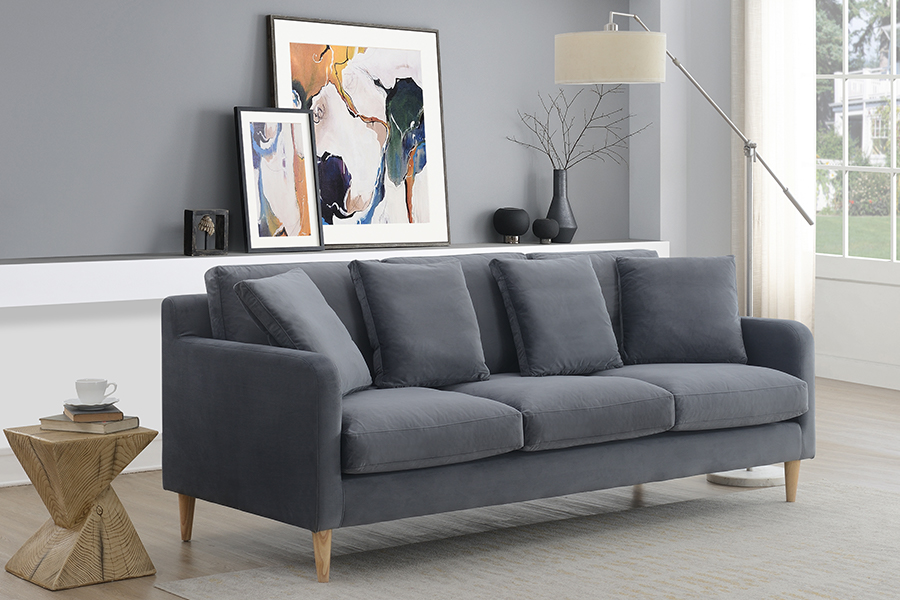
Three seats, two arms and one frame expected to hold it all together for a decade. Long before fabric color enters the conversation, four decisions inside the sofa decide whether a three-seater earns its place in the room.
Two upholstered 3 seater sofas can sit side by side in a showroom, wear the same grey weave and sit within a few dollars of each other on price, then age in completely different ways. One keeps its lines through years of family traffic; the other sags at the front edge, creaks at the corners and pills wherever the dog sleeps. The difference is never the color. It is the frame, the suspension, the foam density and the fabric specification, roughly in that order.
Judge what is inside first and treat styling as the reward for getting it right. A three-seater is the workhorse of a living room. It absorbs more sitting hours than any accent chair, hosts holiday guests and doubles as an afternoon nap station, which is why buying it on looks alone is the most common and most expensive mistake in furniture purchasing. Most designs measure 183 to 229 cm (72 to 90 inches) wide with seat depths of 53 to 61 cm, numbers that matter when the conversation turns to fitting the piece to a room.
Start With the Frame, Because Nothing Else Survives a Bad One
A hardwood frame, kiln-dried and properly joined, is the single biggest predictor of sofa lifespan. Kiln drying brings timber moisture down to roughly 8 to 12 percent, which is what keeps rails straight after the upholstery closes them inside the finished piece. Once a frame twists in there, no cushion will hide the wobble.
The quality of a three-seater is decided long before the fabric goes on.
Joinery is where workshops separate themselves. Look for dowelled and glued joints reinforced with solid corner blocks that are screwed as well as glued, and be careful with frames built mainly from particleboard or thin, unbattened plywood. Staple-only construction costs less to make and gives back exactly what it promises. A manufacturer confident in its joinery usually warranties the frame in years rather than months, and that warranty length is one of the more honest signals on any specification sheet.
In our own workshops, frame components are cut on CNC machining centres, so every rail and corner block repeats to the same tolerance across a production run. That consistency matters little in one sample and enormously in a container of two hundred sofas bound for a retail floor.
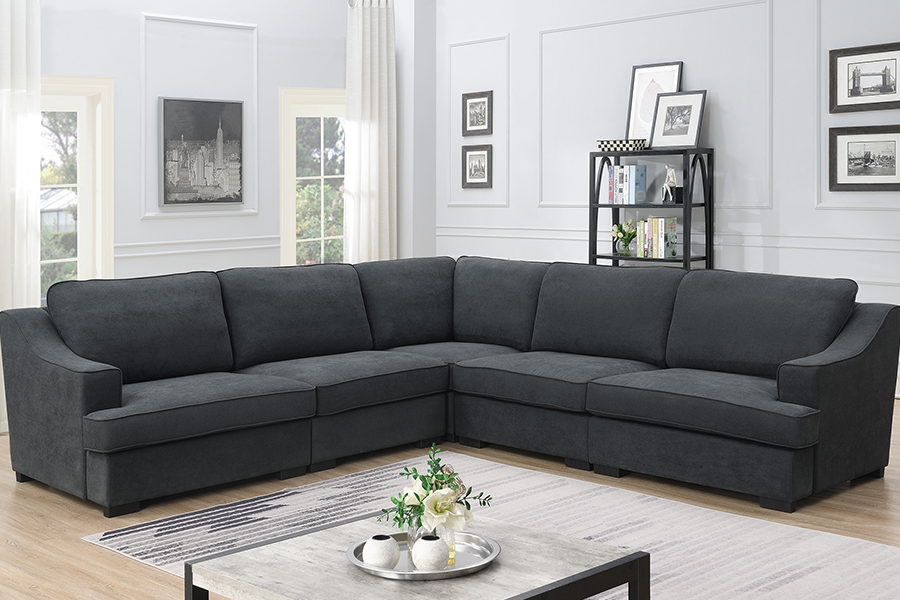
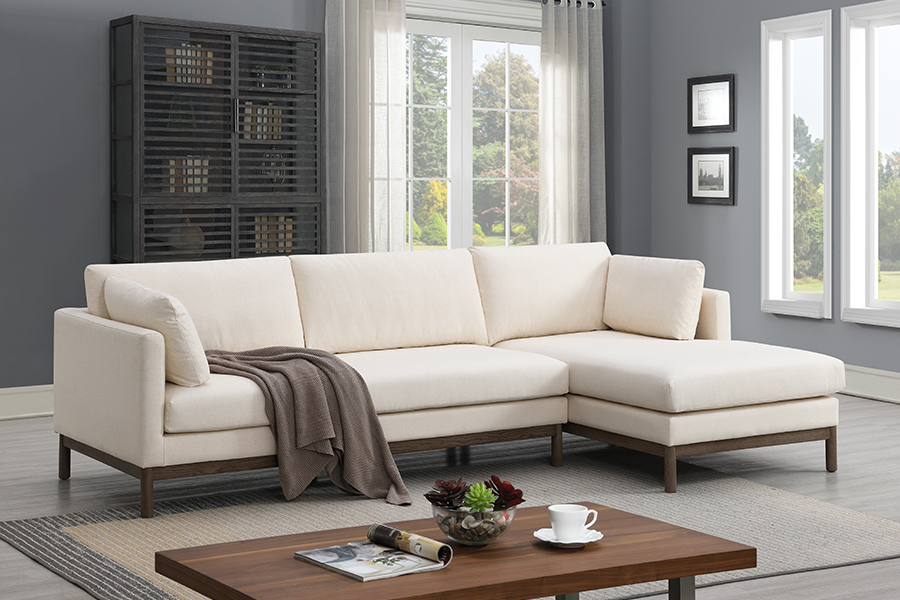
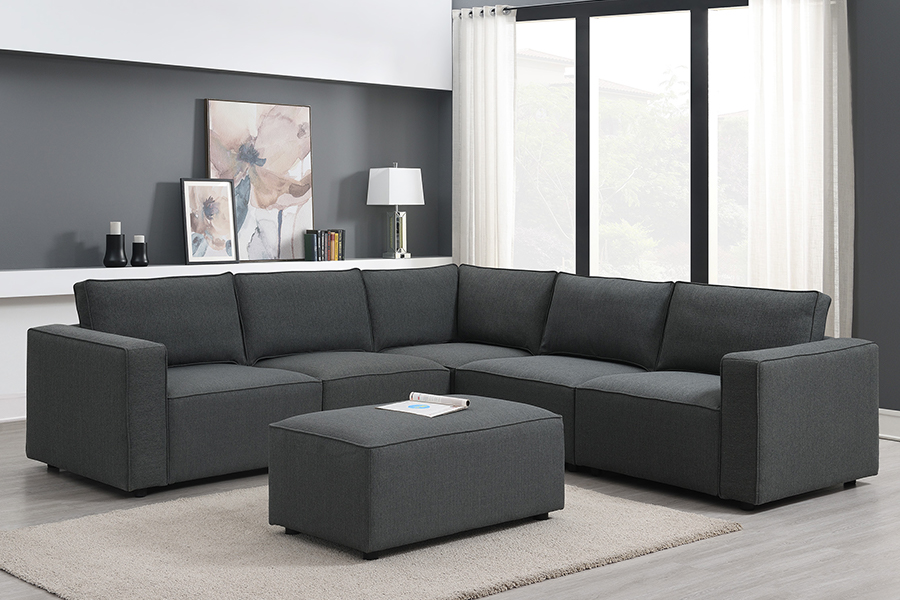
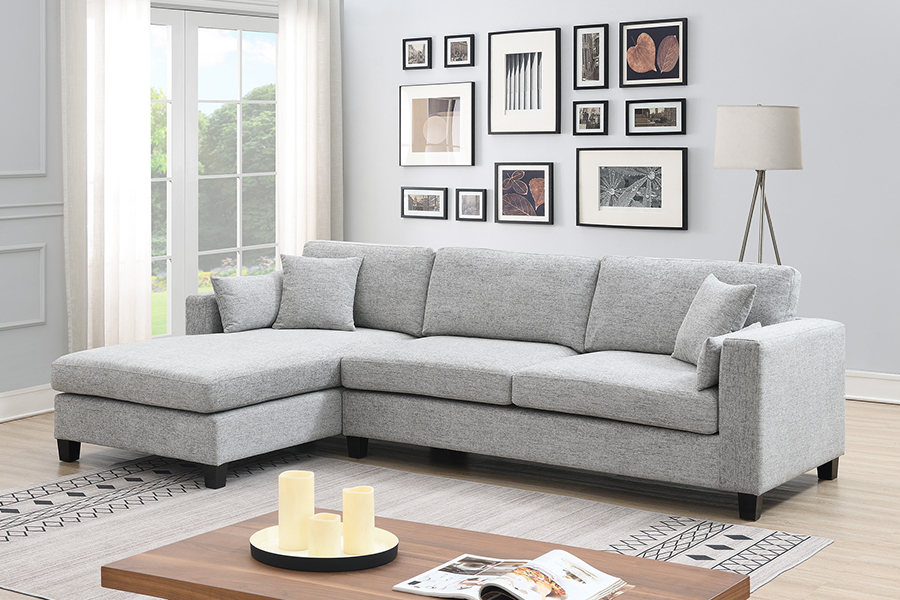
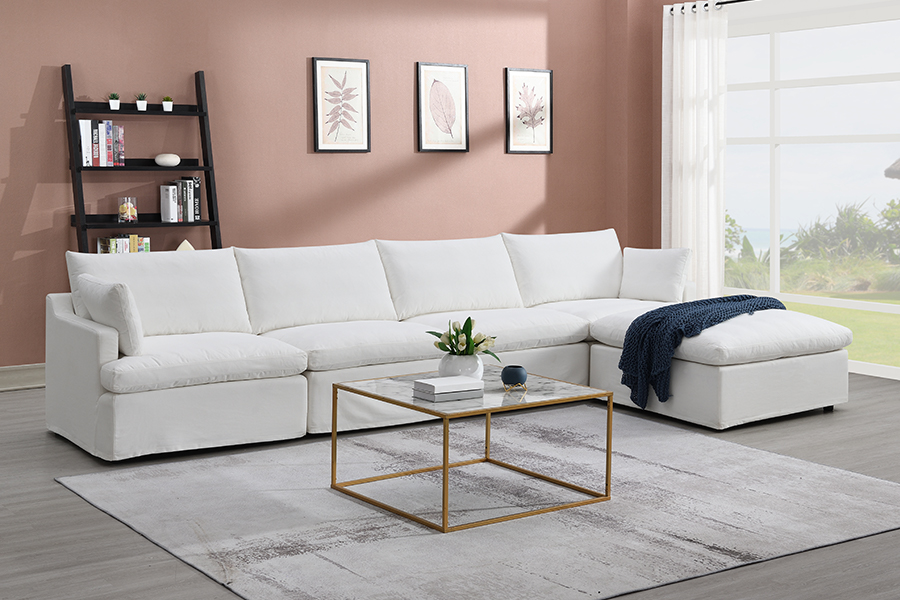
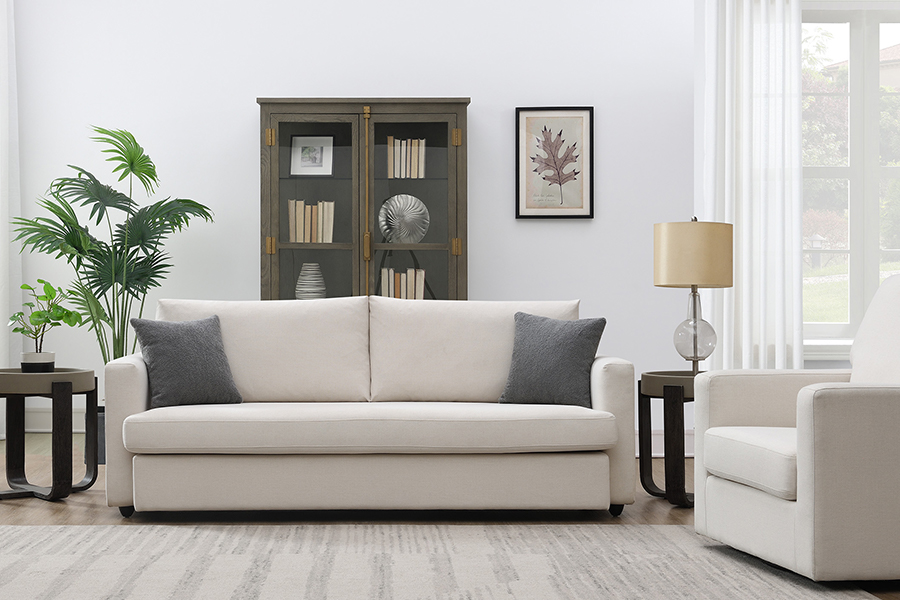
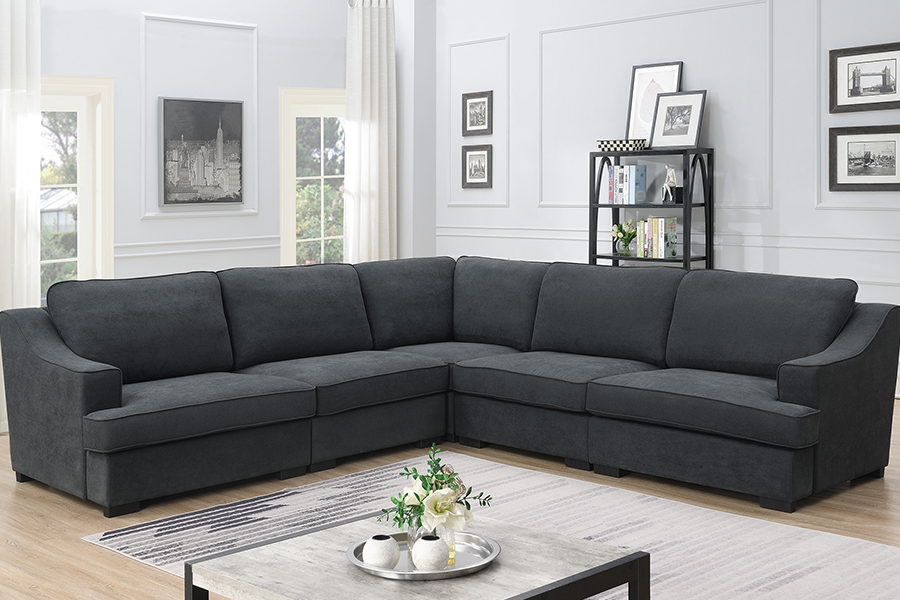 Upholstered Sofas from a CNC-Equipped WorkshopUpholstered sofas covered in fabric, leather or microfiber, available in styles from traditional to contemporary with removable covers. CNC-machined frame components keep rails and corner blocks consistent across full production runs.View Product →
None of this requires a factory tour to verify. Ask what the frame is made of, how the corners are joined and what the frame warranty covers. A supplier who answers those three questions with specifics is worth a second conversation.
Foam Density Is the Number Most Buyers Never Ask About
Density, firmness and the difference between them
Density predicts how long a cushion keeps its shape; firmness only describes day one. Density is measured in kilograms per cubic metre or pounds per cubic foot and reflects how much material is actually in the foam. Seat foam below about 1.8 lb/ft3, roughly 29 kg/m3, tends to flatten under daily family use within a couple of years. High-resilience foam in the 2.0 to 2.5 lb/ft3 range is the dependable workhorse for a sofa used every evening.
Firmness, expressed as ILD, is a separate dial. The same 2.2 density foam can be made soft, medium or firm, so two cushions of identical firmness can age completely differently if their densities differ. Back cushions are a deliberate exception: fiber and feather blends trade support for softness, which is a legitimate choice as long as it is stated.
Suspension: the middle layer
Between frame and cushion sits the suspension, whether eight-way hand-tied springs, sinuous springs or elastic webbing. All three can perform for decades; what matters is that the method is specified and built consistently. An unspecified suspension system is a fair reason to keep asking questions.
| Cushion construction | Typical feel | Long-term behaviour | Best suited to |
|---|---|---|---|
| High-resilience foam core | Even and supportive | Holds shape for years at 2.0+ density | Daily family seating |
| Foam core with fiber wrap | Softer initial sit | Wrap compacts; occasional plumping needed | Mixed-use living rooms |
| Feather and down blend | Deep, luxurious sink | Needs regular fluffing to stay presentable | Formal or low-traffic rooms |
| Foam with pocket springs | Responsive and buoyant | Springs add airflow and resilience | Premium specifications |
If a quotation lists seat cushions without a foam density figure, treat it as incomplete. Ask for the number in writing before comparing prices: density is one of the cheapest places to cut cost and one of the hardest things to detect in a showroom sit.
Fabric: Martindale Counts and Adjectives Do Not
Fabric durability is one of the few parts of sofa specification with a widely accepted test. The Martindale rub test counts how many cycles a sample withstands before visible wear appears. As a working rule, below 15,000 cycles suits decorative pieces that see little use, 15,000 to 25,000 covers light domestic use, and 25,000 to 40,000 handles heavy domestic use, which is exactly what a family-room three-seater endures. Above 40,000 enters contract territory for hotels and lobbies.
Ask for the test result rather than the adjective. "Family friendly" means nothing on a label; 30,000 Martindale means something. Beyond abrasion, check lightfastness if the sofa lives near a window, pilling resistance on high-friction zones such as the arms, and seam strength where panels join. Tightly woven fabrics generally outperform loose, float-backed chenilles in busy households, and a removable zip-off cover, where offered, turns deep cleaning from a gamble into a routine.
Measure the Route Before You Fall for the Sofa
The delivery route defeats more three-seaters than the living room does. A sofa that fits the wall can still fail at a narrow hallway turn, a stairwell landing or a doorway with a radiator beside it. Before ordering, measure the width and height of every door, corridor and staircase between the truck and the wall, then compare those numbers with the sofa's diagonal depth, usually the largest measurement the piece owns.
Tip: photograph the delivery path with a tape measure held in each tight spot. When access questions come up during the order, those photos settle them faster than memory will.
Inside the room, plan on roughly 45 cm (18 inches) between the front edge of the sofa and the coffee table, and keep main walkways 75 to 90 cm wide. Seat heights between 43 and 48 cm suit most adults, while seat depth sets the character: 53 to 61 cm runs from upright and social to deep and loungy, and taller households usually prefer the deeper half.
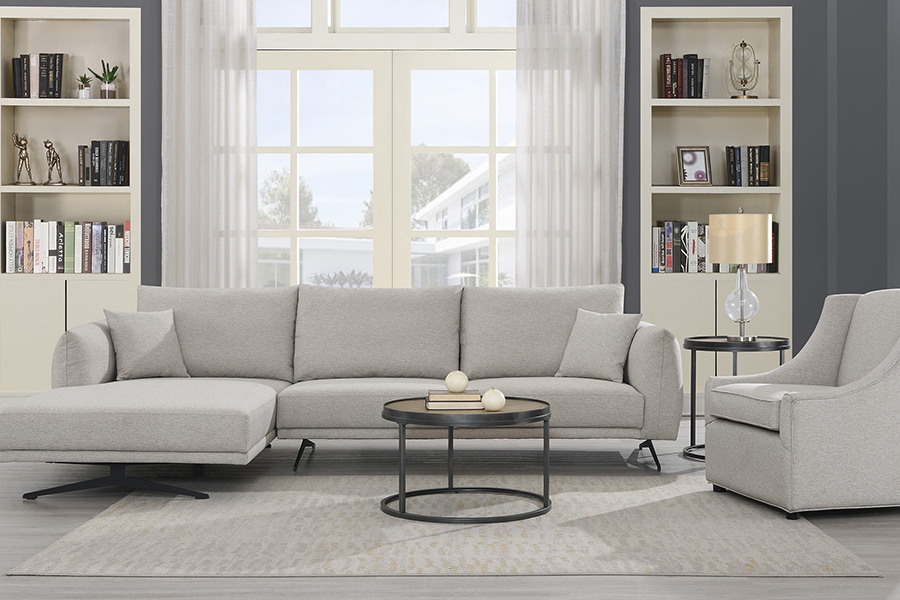
A three-seater also rarely sits alone. An accent chair at an opposite angle balances the composition and keeps conversation from depending entirely on one long bench, which matters in open-plan rooms where the seating group is read from several directions.
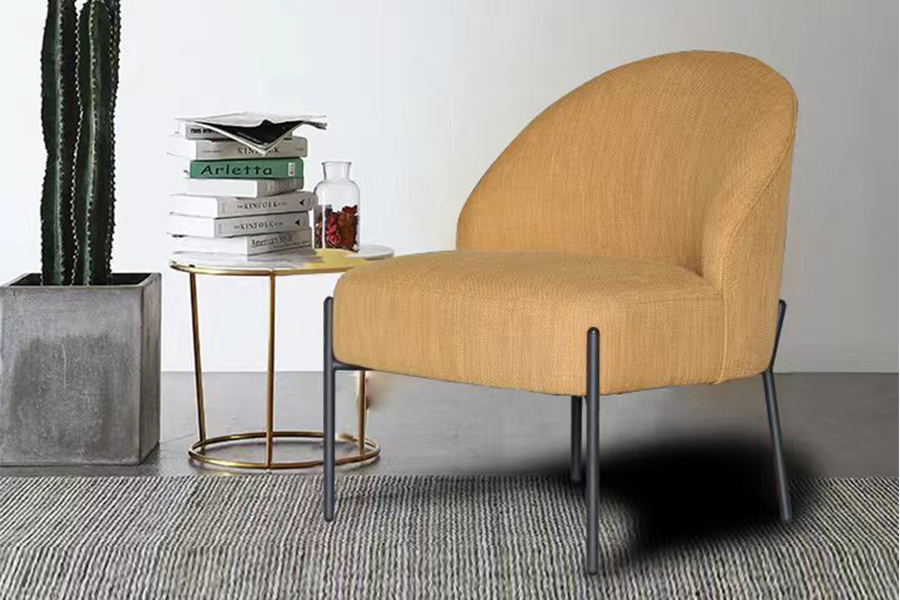
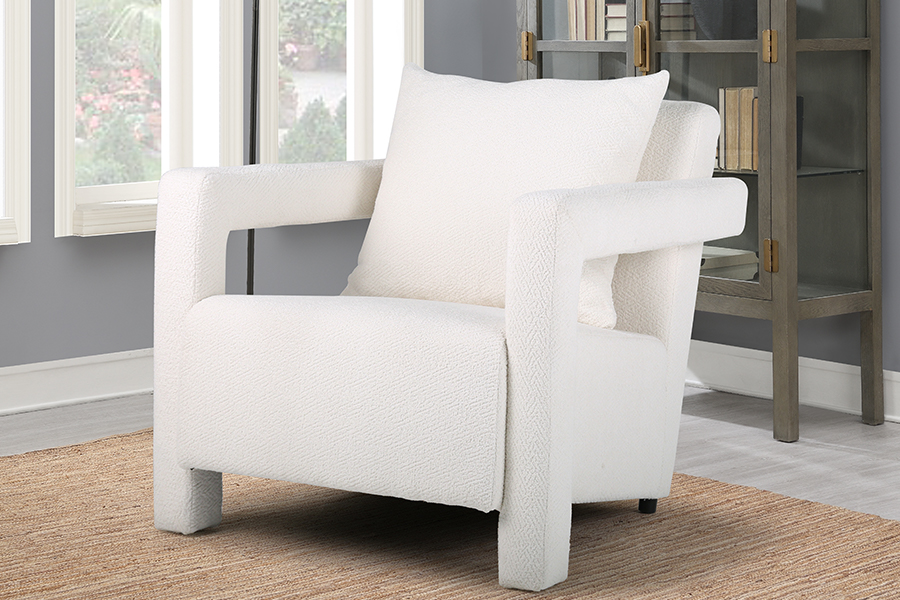
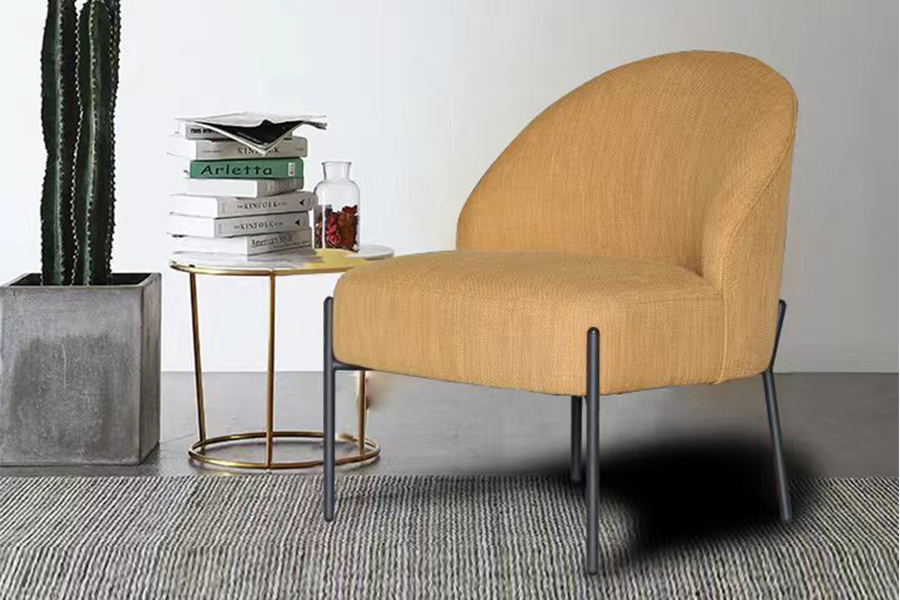 Upholstered Accent Chairs to Complete Seating GroupsPadded accent chairs with frames in wood, metal, or both, filled with foam or down. Pairing one with a three-seater balances the layout and keeps conversation flowing in open-plan rooms viewed from several directions.View Product →
An ottoman earns its corner of the room differently: a footrest that drifts wherever the evening needs it, spare seating when guests arrive, and a softening counterweight to all those straight sofa lines.
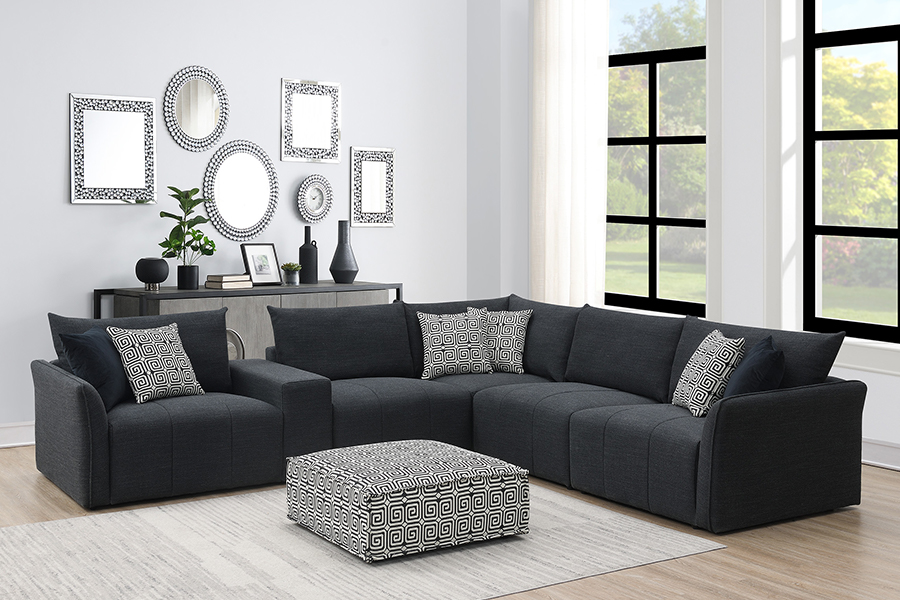
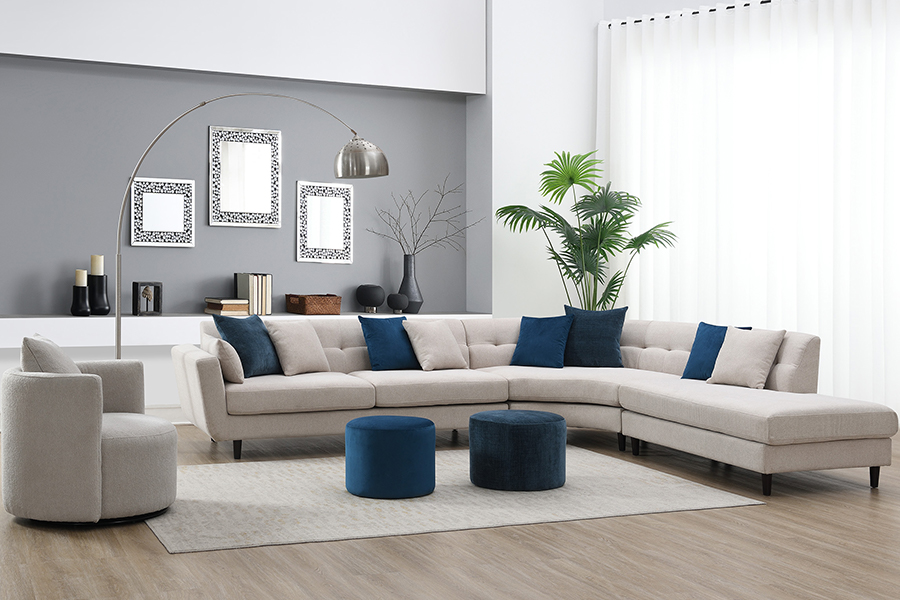
 Upholstered Ottomans, Stools and PoufsVersatile upholstered footstools, stools and poufs that serve as footrests, spare seating or soft accents, in fabrics like leather, velvet and cotton. A natural companion piece before discussing specifications and export programs.View Product →
What Wholesale and Project Buyers Should Put in Writing
For importers, retail brands and contract buyers, the difference between a smooth program and a costly one is usually the specification sheet, not the price list. As a furniture manufacturer and exporter serving residential and commercial clients, we see the same pattern repeat: buyers who pin down materials and tolerances before the first container meet far fewer surprises than buyers who negotiate on price alone.
A workable minimum checklist:
- Frame timber and drying method, stated by species and kiln-dried status.
- Seat foam density as a number, never an adjective.
- Suspension type and how it is attached to the frame.
- Fabric name, composition and Martindale result.
- Cushion construction for each position, seat and back.
- Packaging method, including corner protection and a moisture barrier for sea freight.
Sampling protects both sides. Approve a counter sample, run a small pilot batch before committing to volume, then compare the two for consistency. Customization is where a capable factory earns its keep: seat depth, arm style, foam specification and fabric can all be adapted to a brand program, but only when the base construction is sound.
A tender won purely on the lowest FOB price usually pays the difference back in warranty claims, container rejections and returns. When one quote sits far below the others, the saving is almost always hiding in foam density, frame timber or packaging.
Keeping a Good Sofa Good
Maintenance on a well-built three-seater is a habit, not a project. Four routines cover most of it:
- Rotate and flip seat cushions weekly so wear spreads evenly across the foam.
- Vacuum monthly with a brush attachment to lift the grit that quietly grinds fibers loose.
- Blot spills promptly with a clean, dry cloth; rubbing drives stains deeper.
- Keep the piece out of prolonged direct sun, which fades dye and embrittles fibers.
Cushion rotation is the highest-return habit on the list. Households that rotate weekly see noticeably more even wear, and the whole task costs about thirty seconds.
A professional clean every twelve to twenty-four months resets fabric far more gently than aggressive home remedies. For fabric-specific guidance and a fuller routine, our guide on how to properly maintain and protect upholstered sofas walks through the cleaning steps in detail.
A well-chosen upholstered 3 seater sofa is the most used seat in a home, and it deserves to be bought that way: frame first, foam density in writing, Martindale above 25,000 for family use, dimensions checked against the room and the doorway, and a supplier willing to put all of it on paper. Get those decisions right and the fabric becomes the easiest part of the conversation. Get them wrong and no swatch, however beautiful, will hold up under Tuesday evenings, weekend guests and one committed dog.