 English
 中文简体
中文简体Living Room · Seating Guide
The Accent Chair, Reconsidered
Why the smallest chair in the room often does the most work — and how its purpose diverges, quietly but completely, from the traditional armchair beside it.
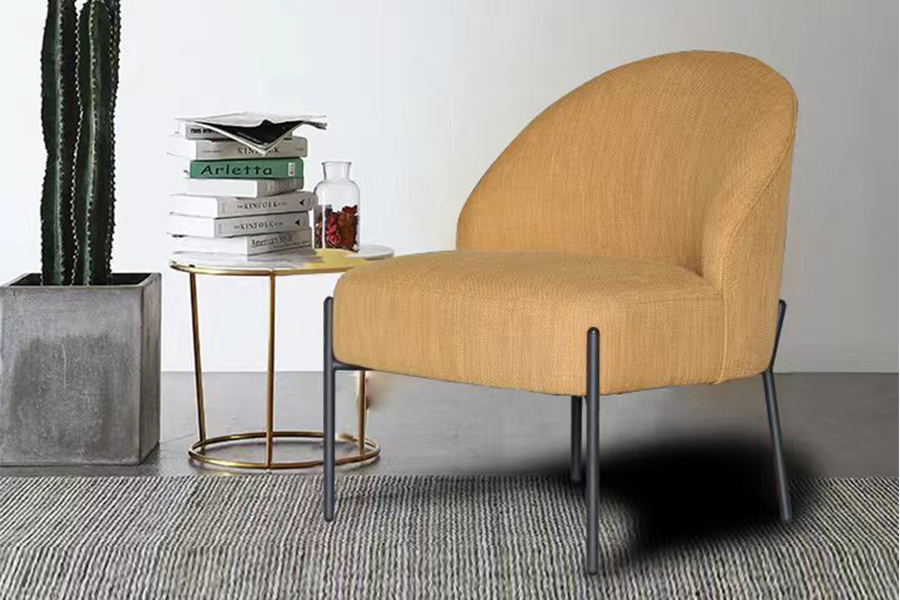
An accent chair is a single-seat piece of furniture designed primarily to add visual contrast, color, texture, or style to a room rather than to serve as a household's main seating solution. Unlike sofas or sectionals that anchor a living room's seating arrangement, an accent chair is typically placed as a secondary or complementary piece — in a corner, beside a window, or as a conversation-starting accent near an entryway. The defining difference in design purpose between an accent chair and a traditional armchair comes down to intent: an accent chair is chosen for its decorative statement first and its seating function second, while a traditional armchair is built with comfort and everyday use as the primary goal.
This distinction shapes nearly every design decision that follows — from the height of the backrest to the depth of the seat cushion, from the presence or absence of armrests to the type of upholstery selected. Understanding this core difference helps buyers avoid a common mistake: purchasing an accent chair expecting the deep comfort of a lounge chair, or buying a traditional armchair expecting the bold visual punch of an accent piece.
It also helps to think of the accent chair as a design tool rather than a furniture piece selected purely for function. Interior designers frequently use a single accent chair the same way they might use a piece of art or a bold rug — as a focal point that pulls a room's palette together. A traditional armchair, meanwhile, is chosen the way a sofa is chosen: for how well it will hold up to daily use over several years of sitting, resting, and everyday family life. Both are valid seating solutions, and in many well-planned rooms they are used together rather than as substitutes for one another.
Design Purpose
Decoration Versus Daily Comfort
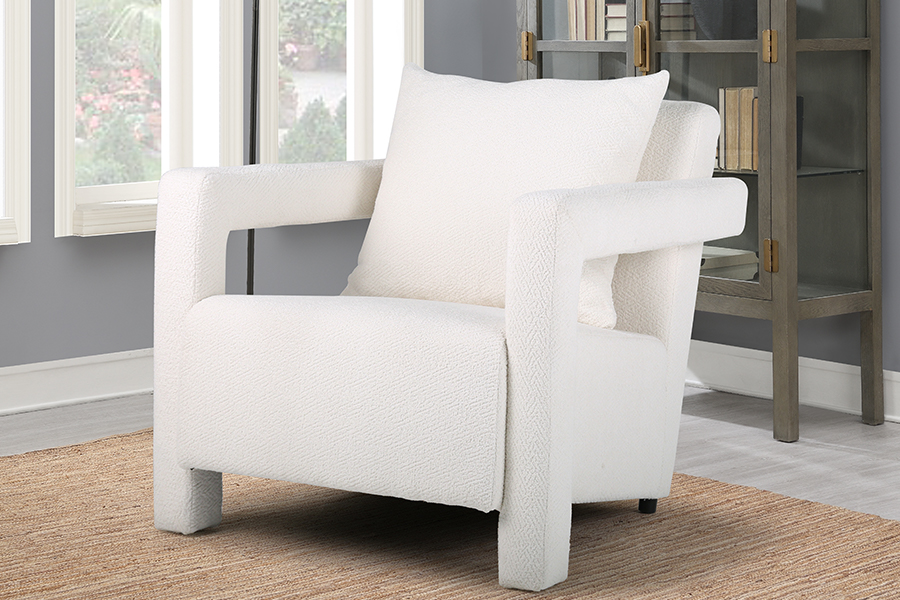
The traditional armchair was developed with one job: provide sustained, ergonomic comfort for hours of sitting, reading, or relaxing. Its proportions — typically a seat height between 17 and 19 inches, a seat depth of 21 to 23 inches, and a reclined backrest angle of 95 to 105 degrees — are engineered around the human body's resting posture. Armrests are almost always full-length and padded, since they are meant to be used constantly. The frame underneath is usually built heavier as well, often relying on kiln-dried hardwood joined with dowels or corner blocks so the piece can absorb repeated daily pressure without loosening over time.
accent chair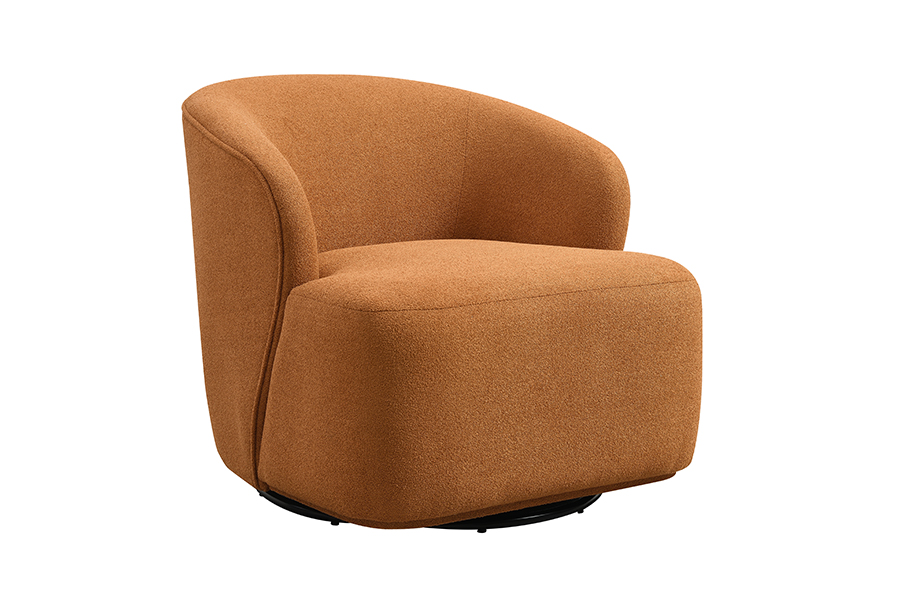
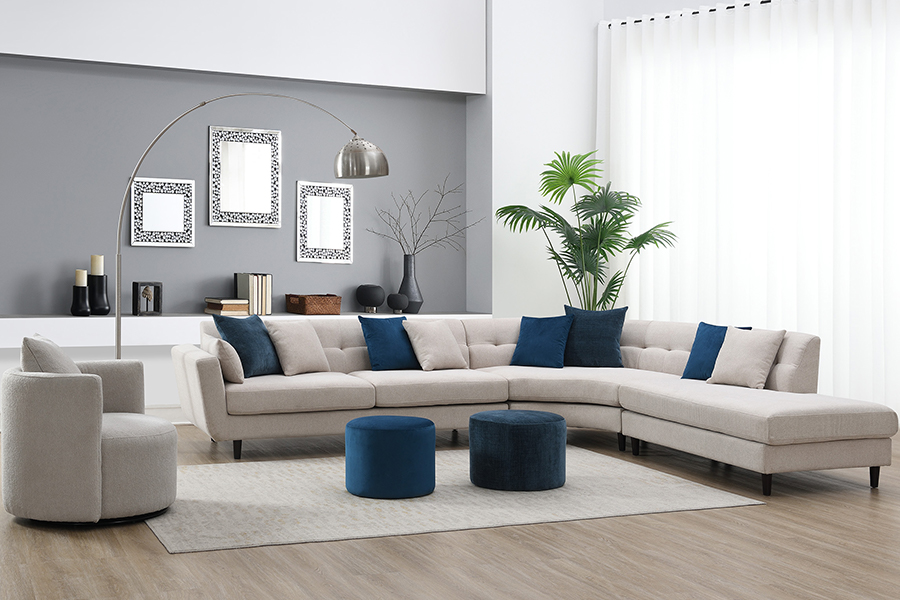
An accent chair, by contrast, is engineered around the room, not solely the body. Its dimensions are often more compact and its silhouette more sculptural, because it needs to fit into tighter footprints — a hallway nook, the foot of a bed, a reading corner — while still drawing the eye. Many accent chairs skip full armrests entirely or use slim, low-profile arms so the chair reads as lighter and more architectural. Some are designed as a swivel upholstered chair, which lets the sitter rotate to face different parts of a room without needing to reposition the entire piece — a functional nod to the chair's decorative, flexible role rather than its use as a long-term reading seat.
An accent chair is engineered around the room. A traditional armchair is engineered around the body.
Construction
Comparing Structural Elements Side by Side
Looking at construction details makes the difference between these two chair types concrete. The table below outlines how the two typically diverge across common structural categories.
| Feature | Accent Chair | Traditional Armchair |
| Primary Function | Visual statement, accent piece | Everyday comfortable seating |
| Seat Depth | 18–21 inches | 21–23 inches |
| Armrests | Slim, low-profile, or absent | Full-length, padded |
| Common Base Type | Tapered legs, swivel base | Solid legs, occasional recliner mechanism |
| Typical Placement | Corners, entryways, bedrooms | Living room seating cluster |
Structural comparison between accent chairs and traditional armchairs
Materials
Upholstery, Color, and Pattern Choices
Because an accent chair is meant to stand out, manufacturers tend to offer it in bolder colors, patterned fabrics, velvet, boucle, or leather-look materials that traditional armchairs rarely use. A neutral-toned living room might use a single accent chair in a mustard velvet or a geometric print specifically to break up an otherwise monochrome palette. Traditional armchairs, in comparison, are far more likely to appear in upholstered livingroom chairs collections that favor durable, neutral, easy-to-match fabrics like linen blends, tweed, or performance weaves — materials chosen for longevity and coordination with a sofa rather than contrast against it.
This does not mean accent chairs sacrifice durability. Many modern accent chairs use the same performance fabrics found in mainstream upholstered seating, simply applied in more expressive colorways. The difference is one of styling strategy, not material quality.
Good to know
Check the fabric's abrasion rating, listed in double rubs on the hang tag. A rating of 15,000 double rubs or higher is generally suitable for regular household use, whether the piece is a decorative accent chair or a heavily used traditional armchair.
Ergonomics
Comfort and Ergonomics: What Buyers Should Expect
Seat Cushioning
Traditional armchairs generally use higher-density foam or foam-wrapped spring cores to support extended sitting sessions, often rated for 8+ hours of comfortable use. Accent chairs may use firmer, thinner cushioning since they are not typically expected to bear the same duration of daily use, which also helps preserve their sculpted silhouette over time.
Backrest Height and Support
Traditional armchairs frequently include high backs or wings that support the head and shoulders, useful for reading or napping. Accent chairs more often feature a lower or shorter backrest that ends around the shoulder blades, prioritizing an open, lightweight visual profile over head support.
Frame and Base Stability
A traditional armchair's frame is typically built to remain stationary, with four fixed legs distributing weight evenly across a wider footprint. Many accent chairs, especially those marketed as a swivel upholstered chair, use a rotating metal or wood base plate instead, which trades some stability for the ability to turn 360 degrees. This makes the swivel accent chair particularly useful in multi-purpose rooms where the sitter may want to face a television one moment and a conversation area the next, without needing to physically reposition a heavier piece of furniture.
Trade-off to weigh
A swivel base trades some stability for rotational freedom. In high-traffic households, confirm the base locks or resists tipping before choosing a swivel accent chair over a fixed-leg design.
Placement
Where Each Chair Type Performs Best
Choosing between the two often comes down to the room and its function. Below are common placement scenarios and which chair type tends to be the better fit.
- Living room seating cluster around a coffee table: traditional armchair for sustained comfort
- Bedroom reading corner or vanity nook: compact accent chair, often a swivel upholstered chair for flexible positioning
- Entryway or foyer: accent chair chosen mainly for its visual welcome, not for long sitting
- Home office secondary seating: accent chair with a slim profile to save floor space
- Media room or family lounge: traditional armchair, often paired with matching upholstered livingroom chairs for a cohesive seating group
Space Planning
Sizing and Space Planning Considerations
Accent chairs are generally more compact, with typical overall widths of 26 to 32 inches, making them well suited to apartments or smaller rooms where a traditional armchair's 30 to 36 inch footprint would feel bulky. When space planning, it's worth measuring at least 30 inches of clearance in front of any chair to allow comfortable entry and exit, regardless of chair type. For rooms under 150 square feet, an accent chair's smaller scale usually preserves better traffic flow than a traditional armchair would.
- Measure the intended footprint, allowing at least 30 inches of clearance in front of the chair
- Match the chair's scale to the room — compact accent chairs for tight corners, deeper armchairs for open floor plans
- Consider a swivel base for accent chairs placed near multiple activity zones
- Coordinate fabric weight and texture with existing upholstered livingroom chairs to keep the room's palette cohesive
Common mistake
Skipping the clearance measurement is the single most common sizing error. A chair that fits the wall space but not the walking path will make the whole room feel smaller, not larger.
Budgeting
Cost Expectations and Value Considerations
Pricing between the two categories can vary significantly based on materials and construction quality rather than category alone. However, because accent chairs often use simpler frame construction and less dense cushioning, they can sometimes be priced lower than a comparably sized traditional armchair with a heavier hardwood frame and higher-grade foam. That said, an accent chair upholstered in premium velvet or leather-look material with a solid wood or metal swivel base can cost as much as, or more than, a mid-range traditional armchair. Buyers should evaluate frame material, cushion density, and upholstery grade rather than assuming category name alone dictates price.
Value tip
Judge a chair by frame, cushion density, and upholstery grade — not by whether it's labeled "accent" or "armchair." Category name alone is not a reliable price signal.
In Summary
Making the Right Choice for Your Space
The decision ultimately comes down to what the chair needs to do. If the goal is to add a striking visual element, fill an awkward corner, or provide flexible seating in a small room, an accent chair — particularly a swivel upholstered chair — is the stronger choice. If the goal is to provide dependable, long-duration comfort as part of a room's core seating arrangement, a traditional armchair, ideally matched with other upholstered livingroom chairs, will better serve daily use. Many well-designed living rooms actually use both: a pair of traditional armchairs for the main seating area, paired with a single accent chair positioned slightly apart to add color and personality without competing for the room's primary function.